
01
Experience at Your Budget Level
Builders operate within pricing tiers. A builder fluent at $1.5M rarely executes a $6M home the same way, and vice versa. Match the builder's typical project size to your own.

The most consequential decision in a custom home is not the design or the lot — it is the builder. This guide is written for clients approaching that decision strategically, looking for the builder best suited to their project rather than simply the best-known name in Houston.
Beyond craftsmanship, builder choice quietly determines how communication flows, how quality is enforced, how budget discipline is maintained, and how the schedule holds under pressure. Two builders of similar reputation can produce meaningfully different client experiences on identical drawings.
“The right builder is not necessarily the best builder — it is the builder best suited for your project.”
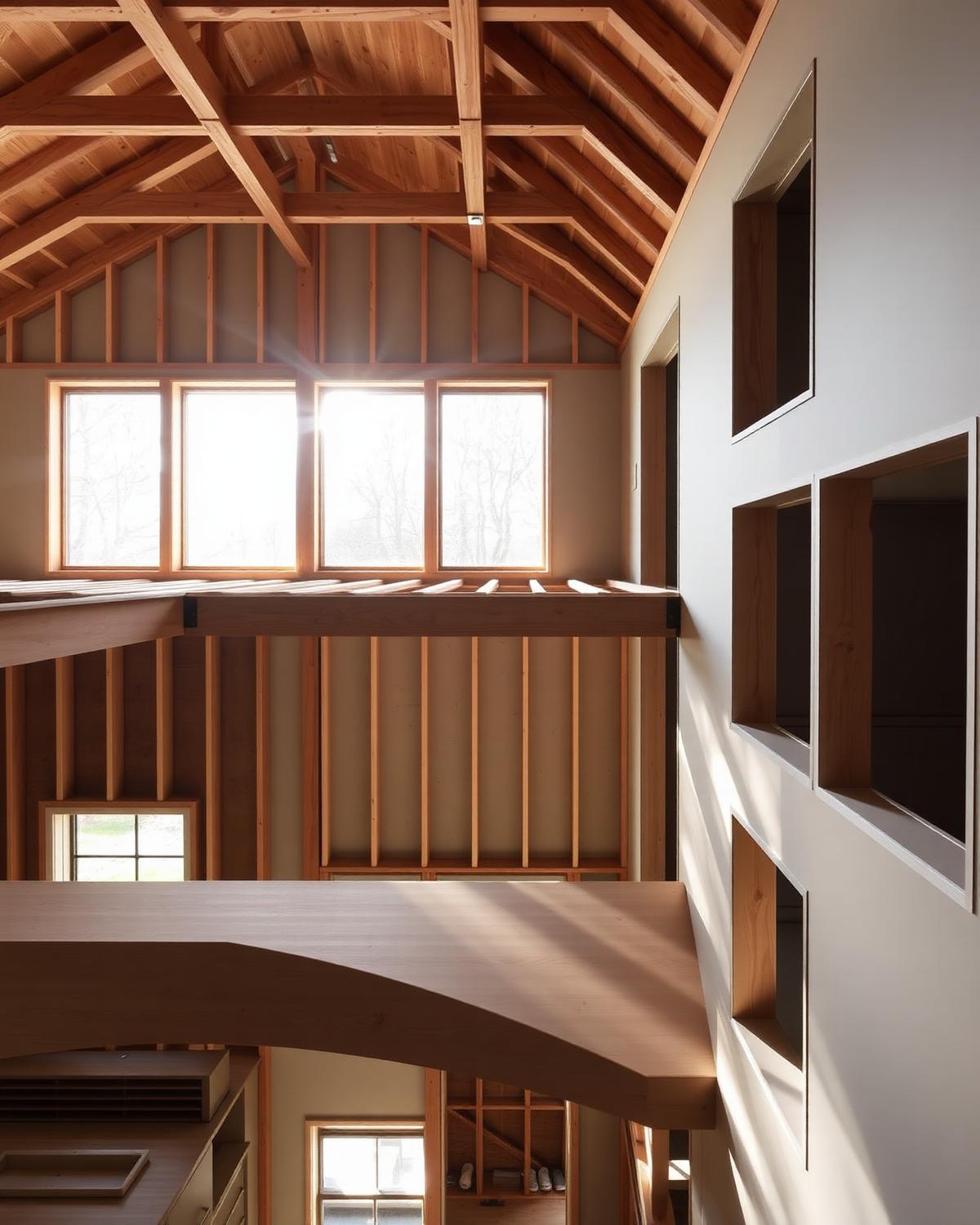
Fig. 01 — Framing stage, Houston custom residence
A structured evaluation covers more than portfolio and price. These twelve dimensions — read together — reveal cultural fit as clearly as capability.
Builders operate within pricing tiers. A builder fluent at $1.5M rarely executes a $6M home the same way, and vice versa. Match the builder's typical project size to your own.
Deed restrictions, ARB culture, and municipal processes differ from Memorial to The Woodlands. Builders with local reps carry institutional knowledge that saves months.
Weekly reports, scheduled walkthroughs, and named points of contact separate disciplined firms from reactive ones. Ask precisely how information will flow.
Line-item pricing, open subcontractor bids, and honest allowances are cultural, not contractual. The builder's default posture toward information matters more than the format.
Bonding capacity, banking references, and lien history quietly reveal how the builder weathers construction cycles, supply shocks, and schedule stress.
Some builders execute what is drawn; others push back constructively. Neither is wrong — but the fit must match your design team and appetite for iteration.
Superintendent-to-project ratios, in-house punch processes, and third-party inspections separate finished from truly finished.
One-year workmanship is standard; two-year systems and ten-year structural signal a builder who expects to be reachable long after closing.
Long-tenured trade partners produce more consistent craftsmanship than the lowest-priced roster. Ask how long the framer, MEP, and finish trades have worked together.
A published schedule with critical-path logic is not a formality. It is the earliest signal of how the project will be managed under pressure.
Change orders are unavoidable in custom work. What matters is pricing methodology, notice timing, and whether the builder treats them as friction or opportunity.
Past clients speak differently one year in versus five. Ask for both — and for a reference the builder would rather you not call.

Fig. 02 — Reviewing contract structure & allowances
Houston’s luxury custom home builders operate under several contract structures. Each carries a distinct posture toward pricing, risk, and design flexibility. No single model is correct — the right choice depends on how resolved the design is and how the client prefers to see costs.
The client pays actual construction costs plus a builder fee (fixed or percentage). Best when scope is still evolving or when transparency is the client's priority.
The builder commits to a defined price for a complete scope of work. Best when drawings and specifications are highly resolved before contract.
A single firm delivers architecture and construction under one contract, coordinating internally rather than across separate teams.
The client contracts separately with architect, interior designer, and builder. Each discipline is chosen on merit and coordinated across the project.
These are the questions that separate a sales conversation from an evaluation. Ask each candidate the same set, and listen for the substance behind the answer.
How many active projects do you carry per superintendent?
What is your typical project size, and where does ours sit within that range?
How is your pricing structured, and what is included in your fee?
How are allowances established, and what happens if they are exceeded?
What is your change order process — pricing, notice, and approval?
How do you handle subcontractor bidding? Is it open-book?
What warranty do you provide, and how are post-closing issues handled?
May we speak with three clients from the last five years — including one whose project was difficult?
How do you communicate schedule and progress week to week?
How do you resolve disagreements with the architect or interior designer?
What is your policy on retaining consistent trades from framing through finish?
What happens if the project takes longer than projected?
Different builders fit different projects. A firm celebrated for refined contemporary work may struggle with a stone traditional; a builder fluent in small estate homes may over-extend on a compound. Budget level, architectural language, personality, and pace of decision-making all shape the right match.
Adrian Woolley Homes is an independent advisor. We do not sell construction, represent builders, or receive referral compensation. The engagement is focused entirely on helping clients evaluate fit — before earnest money, contracts, or momentum make the decision harder to reverse. Learn more about our advisory services or read about Adrian Woolley.
The gap between two luxury bids is usually a signal — allowances, contingency, and scope assumptions — not a discount. Bids should be normalized before compared.
Reputation without recent references is a reputation without evidence. Ask for both the enthusiastic and the difficult project.
Style is not a soft factor. It determines how information reaches you during the twelve to twenty months of construction.
Modern coastal, traditional stone, and refined contemporary are not interchangeable. The builder's finished portfolio should resemble your intended home.
Signing a builder before the site, program, and budget are aligned creates leverage in the wrong direction.
The builder's name is on the sign, but the framer, MEP, and finish trades build the house. Their tenure is the deeper signal.
Builder selection is explored in significantly greater depth within The Custom Home Design Framework™, the proprietary planning methodology reserved for advisory clients.
Adrian Woolley Homes is an independent advisor to affluent Houston clients evaluating luxury custom home builders. The engagement is consultative — a structured framework for shortlisting, interviewing, comparing bids, and reading contract terms before commitment.
We do not replace the builder, architect, or construction team, and we do not provide daily construction management. Instead, we provide strategic guidance during key decisions and milestone reviews — where an independent voice most meaningfully changes outcomes.
Builder selection sits between land evaluation and cost planning. Reading the surrounding decisions in sequence produces the clearest strategy.
Three is typical, and rarely more than four. The evaluation is deeper than a bid comparison — it is a fit assessment across pricing model, communication, culture, and portfolio. Interviewing too many builders dilutes attention and, in Houston's small luxury market, can complicate the relationships needed later.
Each guide in the series addresses one interconnected decision in the custom home process. Read in order for the clearest strategy — or begin with the decision closest to your current stage.
Setbacks, restrictions, orientation, and the costly missteps before an offer.
Continue →The anatomy of a Houston custom home budget — hard costs, allowances, contingencies.
Continue →The structured advisory approach across land, builder, design, and construction.
Continue →A private conversation to bring clarity to your builder selection and next steps.
Continue →A structured, private conversation before builder contracts are signed produces clearer decisions, cleaner comparisons, and a better path from interview to move-in.